China Best One Piece Skiing Suit Manufacturer?

Time:2026-09-18 Author:Henry
0%

Finding the China Best One Piece Skiing Suit Manufacturer requires more than comparing prices. A reliable partner should combine production experience, technical knowledge, and transparent quality controls. The right One Piece Skiing Suit must protect skiers from wind, snow, and sudden temperature changes. It should also allow natural movement on lifts, slopes, and crowded rental areas. Experienced manufacturers usually explain fabric ratings, insulation weights, seam sealing, zipper choices, and size grading clearly. They do not hide behind attractive catalog photos. That matters.

A practical evaluation begins with samples. Check the hood adjustment, cuff closure, snow skirt, pocket placement, and reinforcement around the knees and seat. Test the suit after bending, sitting, and carrying gloves or a phone. Small details reveal production discipline. Ask for fabric test reports, inspection procedures, washing guidance, and evidence of compliance with relevant market requirements. Factory visits, independent audits, and traceable sampling can strengthen confidence, although no supplier is perfect. Even a polished sample may not represent every production batch. This is where careful communication and written specifications become essential. Discuss minimum order quantities, delivery schedules, customization limits, packaging, and after-sales handling before signing an agreement. A dependable manufacturer welcomes reasonable questions and admits limitations. That honesty is valuable.

Price still matters, but performance should lead the decision. Compare total value, not only the unit quotation. A well-built One Piece Skiing Suit can reduce returns, improve user comfort, and support a stronger outdoor brand. The best choice may not be the loudest supplier. It is the one that can repeatedly deliver safe, functional, and consistent garments.
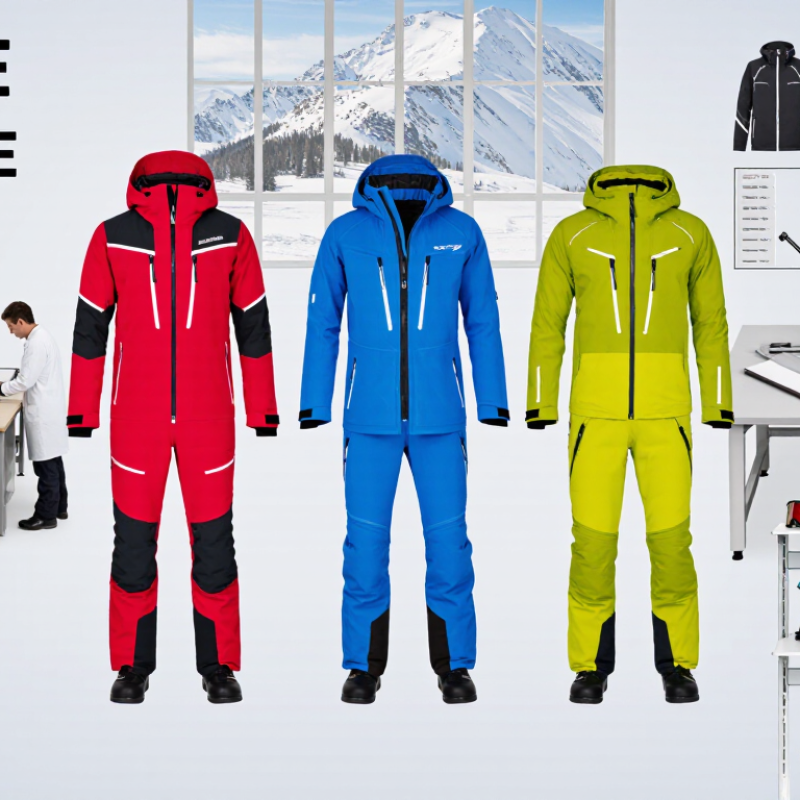
China Best One Piece Skiing Suit Manufacturer?

What Defines a High-Quality One-Piece Ski Suit Manufacturer in China

China Best One Piece Skiing Suit Manufacturer?

A high-quality one-piece ski suit manufacturer combines technical skill with repeatable factory control. Grand View Research’s 2024 ski apparel report identifies insulation, waterproofing, and breathability as major purchase factors. These features begin with tested materials, not attractive catalog photographs. A reliable factory should test fabric waterproof pressure under ISO 811 and surface resistance under ISO 4920. It should also measure thermal resistance using ISO 11092 methods. Small details matter. Sealed seams, protected zippers, and adjustable snow gaiters prevent cold air from entering during long chairlift rides.

Manufacturing experience appears in the sample room and production records. A capable Chinese supplier can explain fabric weight, filling composition, seam-tape width, and wash performance without guessing. Textile Exchange’s 2024 Materials Market Report states that polyester represented about 57% of global fiber production in 2023. Therefore, buyers should check recycled content claims and request transaction certificates when sustainability is promised. Random inspections should cover zipper strength, color migration, needle damage, and insulation distribution. A low defect rate sounds useful, but it can hide weak sampling.

Trust also depends on communication. The manufacturer should provide clear lead times, approved size charts, laboratory reports, and corrective-action records. Factory audits should review worker safety, traceability, and subcontracting controls. No factory is perfect. An honest supplier admits production risks and explains how they will be corrected. That is more reliable than polished claims. During development, realistic wear testing should include wet snow, repeated bending, and children’s movement. Some designs pass laboratory tests but feel restrictive outdoors. Practical feedback still matters.

Key Manufacturing Capabilities and Material Standards

China Best One Piece Skiing Suit Manufacturer?

Key Manufacturing Capabilities and Material Standards

A reliable one-piece skiing suit manufacturer needs more than attractive samples. It needs controlled cutting, accurate seam taping, and stable insulation placement. Factory teams should test fabric water resistance under ISO 811 and thermal resistance under ISO 11092. Breathability matters during uphill movement, not only inside a laboratory. A practical production line should include hydrostatic testing, seam inspection, zipper checks, and repeated laundering tests based on ISO 6330.

Material selection must balance warmth, weight, durability, and moisture control. Polyester remains widely used, while recycled content is increasing. Textile Exchange’s Materials Market Report 2024 estimated global fiber production at 124 million tonnes in 2023. It also projects approximately 160 million tonnes by 2030. This growth makes traceability increasingly important. Manufacturers should provide fiber composition records, supplier declarations, and batch-level color checks. Certified insulation can reduce uncertainty, but certification alone does not guarantee good garment construction.

Tips: Request a complete test report, not a fabric claim. Check seam-tape width, stitch density, and washing performance. Ask whether the factory tests finished suits, because fabric-only results can mislead. A lab result is not the mountain. Field feedback may reveal cold spots, stiff elbows, or trapped moisture. These weak details are easy to overlook, and they often need another design review.

How to Evaluate Chinese Ski Suit Suppliers and Product Quality

China Best One Piece Skiing Suit Manufacturer?

Choosing the best Chinese one-piece skiing suit manufacturer requires more than comparing prices. A supplier should explain fabric weight, waterproof rating, breathability, insulation, seam construction, and size grading. Ask for recent test reports, production photos, and a sample made from current materials. A showroom sample may look excellent, yet bulk fabric can differ. That is a warning.

Evaluate the factory’s working process, not only its catalog. Check whether cutting, seam sealing, zipper installation, and final inspection remain consistent. Request a pre-production sample with your measurements and construction details. Test it in wet, windy conditions if possible. Look for water entering at the hood, cuffs, seat, and zipper. A reliable supplier records defects, repairs, and fabric-roll numbers. Communication also matters. Clear answers often reveal stronger process control. Still, a confident sales reply is not proof. Independent inspection remains worthwhile.

Tips: Use a written checklist for every supplier. Keep one approved sample for production comparison. Ask about size tolerances and replacement procedures before payment. Do not judge quality from photos alone. A lower price can hide thinner insulation, weaker stitching, or inconsistent sizing. Recheck the details.

China Best One Piece Skiing Suit Manufacturer? - How to Evaluate Chinese Ski Suit Suppliers and Product Quality

Supplier and product-quality evaluation framework for one-piece ski suits

Evaluation Dimension Measurable Indicator Reference Method or Standard Suggested Acceptance Benchmark Evidence to Request
Waterproof Performance Hydrostatic pressure of fabric and finished garment ISO 811 or an equivalent recognized hydrostatic-pressure test At least 10,000 mmH₂O for general ski use; 20,000 mmH₂O or higher for demanding conditions Recent laboratory report identifying the tested fabric, construction, and test date
Water Repellency Surface wetting and water beading after laundering ISO 4920 spray test, combined with the agreed laundering procedure Spray rating of 4 or above before washing and a defined minimum rating after repeated washing Before-and-after-wash test results and the care-label instructions
Breathability Resistance to evaporative heat loss, expressed as RET ISO 11092 sweating guarded hotplate method RET of 10 m²·Pa/W or lower is a practical performance target; lower values indicate better moisture-vapor transfer Independent test report with fabric construction and coating details
Seam Sealing Coverage, adhesion, and continuity of seam tape Visual inspection, water-leak test, and supplier-approved seam-tape procedure All critical seams fully sealed; no lifting, gaps, wrinkles, skipped sections, or needle holes Inside-out sample inspection, seam-tape specification, and production inspection photos
Thermal Protection Insulation type, fill weight, loft, and thermal resistance EN 342 can be used for protective clothing against cold; compare the complete garment, not insulation alone Insulation weight and construction must match the approved sample and the intended temperature range Material specification, insulation test data, and approved size-set samples
Abrasion Resistance Resistance of shell fabric and high-wear panels to rubbing ISO 12947 Martindale abrasion method Use a buyer-defined target, such as 30,000 cycles or more for high-wear areas, subject to fabric type Test report stating fabric weight, composition, face material, and failure endpoint
Tensile and Tear Strength Fabric resistance to pulling and tearing at stress points ISO 13934-1 for tensile strength and ISO 13937 series for tear strength Set separate warp and weft minimums according to fabric weight and intended use; no unapproved material substitution Pre-production and bulk-production fabric test reports
Colorfastness Color transfer, washing fastness, perspiration fastness, and light fastness Relevant ISO 105 test methods, including ISO 105-C06 for domestic and commercial laundering Grade 4 or higher for key colorfastness properties unless a different grade is agreed in writing Colorfastness report for every major color and contrast panel
Dimensional Stability Length and width change after the specified wash and drying process ISO 6330 laundering procedures with dimensional measurement before and after testing Normally keep dimensional change within ±3% for the approved fabric and garment construction Wash-test records, measurement chart, and confirmed care instructions
Zippers and Trims Smooth operation, pull strength, water resistance, and attachment security Supplier-approved component specifications and internal functional testing No opening during bending or movement tests; zipper tape and sliders remain secure after repeated operation Component datasheets, zipper-cycle records, and finished-garment inspection results
Chemical Compliance Restricted substances in shell fabric, coatings, prints, trims, and packaging Applicable REACH requirements and the destination market’s chemical regulations Pass results for the applicable restricted-substance list, with testing based on production-representative materials Batch-specific chemical test report and material declaration
Sizing and Fit Measurement accuracy, mobility, layering room, and size grading Approved measurement chart and documented size-set inspection Critical points within the agreed tolerance, with unrestricted squat, arm-raise, and seated movement Size-set samples, graded pattern measurements, and fitting comments
Workmanship Quality Stitch density, skipped stitches, puckering, loose threads, and panel alignment Approved workmanship standard and final visual inspection No critical defects; major and minor defect limits defined before production Signed inspection standard, defect classification, and pre-shipment inspection report
Quality Control System Incoming, in-process, and final inspection procedures ISO 2859-1 sampling principles may be used for lot inspection Define the inspection level and acceptance quality limit in the purchase agreement; AQL 2.5 major and 4.0 minor are common commercial starting points Quality manual, inspection records, corrective-action reports, and traceability documents
Production Consistency Comparison between approved sample, pre-production sample, and bulk goods Golden sample, sealed reference sample, and documented change-control process No unapproved changes to fabric, insulation, trims, patterns, color, seam construction, or packaging Signed approval sample, material purchase records, and batch traceability
Evaluation Note: The benchmarks above are practical purchasing targets rather than universal legal requirements. Final acceptance criteria should be confirmed according to the destination market, intended temperature range, fabric construction, product positioning, and approved pre-production sample.

Customization, Certifications, Production Capacity, and Lead Times

China Best One Piece Skiing Suit Manufacturer?

Choosing a reliable Chinese one-piece skiing suit manufacturer requires more than comparing prices. Customization should cover fabric weight, insulation, hood shape, pocket placement, zippers, colors, and graded sizes. A capable factory can develop a sample from a technical drawing, then adjust fit after movement testing. Small details matter. Check cuff sealing, snow skirts, zipper garages, and reinforcement around the knees. These features affect warmth and durability on real slopes.

Certifications should match your target market and product claims. Ask for current ISO 9001 documentation, OEKO-TEX test reports, and fabric performance results. Waterproofing, breathability, colorfastness, and seam strength need separate verification. Some factories mention certifications without connecting them to the actual fabric or finished garment. That is a warning sign. Request report numbers, issuing laboratories, and production traceability. Compliance is not decoration.

Production capacity must be measured through practical evidence. Review monthly output, sewing lines, inspection procedures, and material storage. A factory producing 50,000 suits monthly may struggle with a complex custom design. A smaller facility may offer better control, but slower delivery. Typical lead times range from 20 to 35 days for samples and 45 to 75 days for bulk orders, excluding fabric development. Confirm timelines in writing. Delays can still happen when trims, imported fabrics, or failed inspections interrupt production. A pilot order reveals more than a polished presentation.

Pricing, Export Support, and Choosing the Right Manufacturer

China Best One Piece Skiing Suit Manufacturer?
Pricing, Export Support, and Choosing the Right Manufacturer

When comparing Chinese manufacturers, price should never stand alone. A low quotation may exclude fabric testing, custom labels, packaging, or sample revisions. Ask for a line-by-line quotation with minimum order quantities and payment stages. In my sourcing experience, a slightly higher price often reduces correction costs. Request fabric weight, waterproof rating, breathability data, seam construction, and insulation details. These specifications reveal whether the quotation matches real performance.

Export support matters during busy winter seasons. Confirm production lead times, inspection procedures, carton markings, and documentation before placing an order. An experienced manufacturer should explain shipping options clearly, including port arrangements and estimated transit times. Ask how they handle size charts, grading, replacement pieces, and delayed materials. Communication can look excellent during sampling, then weaken after the deposit. Test it with practical questions and a small paid sample order. That step is not perfect, but it exposes weak systems early.

Tips: Compare at least three factories using the same specification sheet. Check recent production photos, independent inspection records, and sample stitching. Visit the facility when possible, or arrange a live video inspection. Do not trust impressive promises alone. I once underestimated fitting changes, and the final cost increased. Build a correction allowance into your budget. A reliable partner should welcome measurable standards, honest timelines, and documented export experience.

China One-Piece Ski Suit Manufacturer Selection Benchmark

This benchmark compares the main purchasing factors used when evaluating Chinese one-piece ski suit manufacturers. The normalized scores reflect practical sourcing priorities: competitive FOB pricing, export readiness, product quality, customization capability, minimum order flexibility, and production lead time. Use the chart as a planning reference rather than a quotation from any specific company.

FAQS

What should I ask a Chinese one-piece ski suit supplier before ordering?

Ask about fabric weight, waterproof rating, breathability, insulation, seam construction, and size grading. Request current test reports and material details.

Why is a production sample important?

A showroom sample may use different fabric from bulk production. Request a pre-production sample with your measurements and construction details. Test it.

How can I check a ski suit’s waterproof performance?

Test the suit in wet, windy conditions when possible. Check the hood, cuffs, seat, and zipper for water entry. Photos are not proof.

Which construction details reveal product quality?

Examine seam sealing, zipper installation, stitching strength, and insulation consistency. Check whether cutting and final inspection follow the same process.

How should I compare supplier prices?

Request line-by-line quotations. Include fabric testing, packaging, labels, sample revisions, minimum quantities, and payment stages. A low price can hide thinner insulation.

What export support should a reliable supplier provide?

Confirm production lead times, carton markings, inspection procedures, and shipping documents. Ask about port arrangements and estimated transit times.

How can I test a supplier before placing a large order?

Use the same specification sheet for at least three suppliers. Place a small paid sample order. Test communication with practical questions.

What records should a supplier maintain during production?

The supplier should record defects, repairs, and fabric-roll numbers. Keep one approved sample for comparison. Keep records.

How should I handle sizing and replacement issues?

Confirm size charts, grading rules, tolerance limits, and replacement procedures before payment. Fitting changes can increase costs. I underestimated this once.

Is an independent inspection worth arranging?

Yes, especially when the quotation seems unusually low. A confident sales reply is not proof. Independent inspection can reveal inconsistent sizing or stitching.

Conclusion

Choosing the right One Piece Skiing Suit manufacturer in China requires more than comparing prices. A high-quality supplier should combine advanced pattern development, precise stitching, reliable insulation technology, and durable, weather-resistant fabrics. Strong manufacturers maintain clear material standards, consistent quality control, and skilled production teams capable of handling both standard collections and customized designs. Buyers should assess product samples, factory capabilities, inspection procedures, and customer communication before placing an order.

Customization options may include colors, sizing, fabrics, logos, packaging, and functional details such as waterproof zippers or adjustable insulation. It is also important to verify relevant certifications, production capacity, minimum order quantities, and realistic lead times. Competitive pricing should be evaluated alongside fabric quality, workmanship, sampling costs, and after-sales support. An experienced export team can simplify documentation, shipping coordination, and order management. By reviewing these factors carefully, buyers can select a dependable Chinese manufacturer that delivers comfortable, functional, and consistently well-made ski suits for different markets and outdoor conditions.


Henry

Henry

Henry is a dedicated marketing professional with a profound expertise in the company's offerings. With years of experience in the industry, he possesses an impressive understanding of the market dynamics and consumer behaviors that drive success. Henry is committed to sharing his insights through......